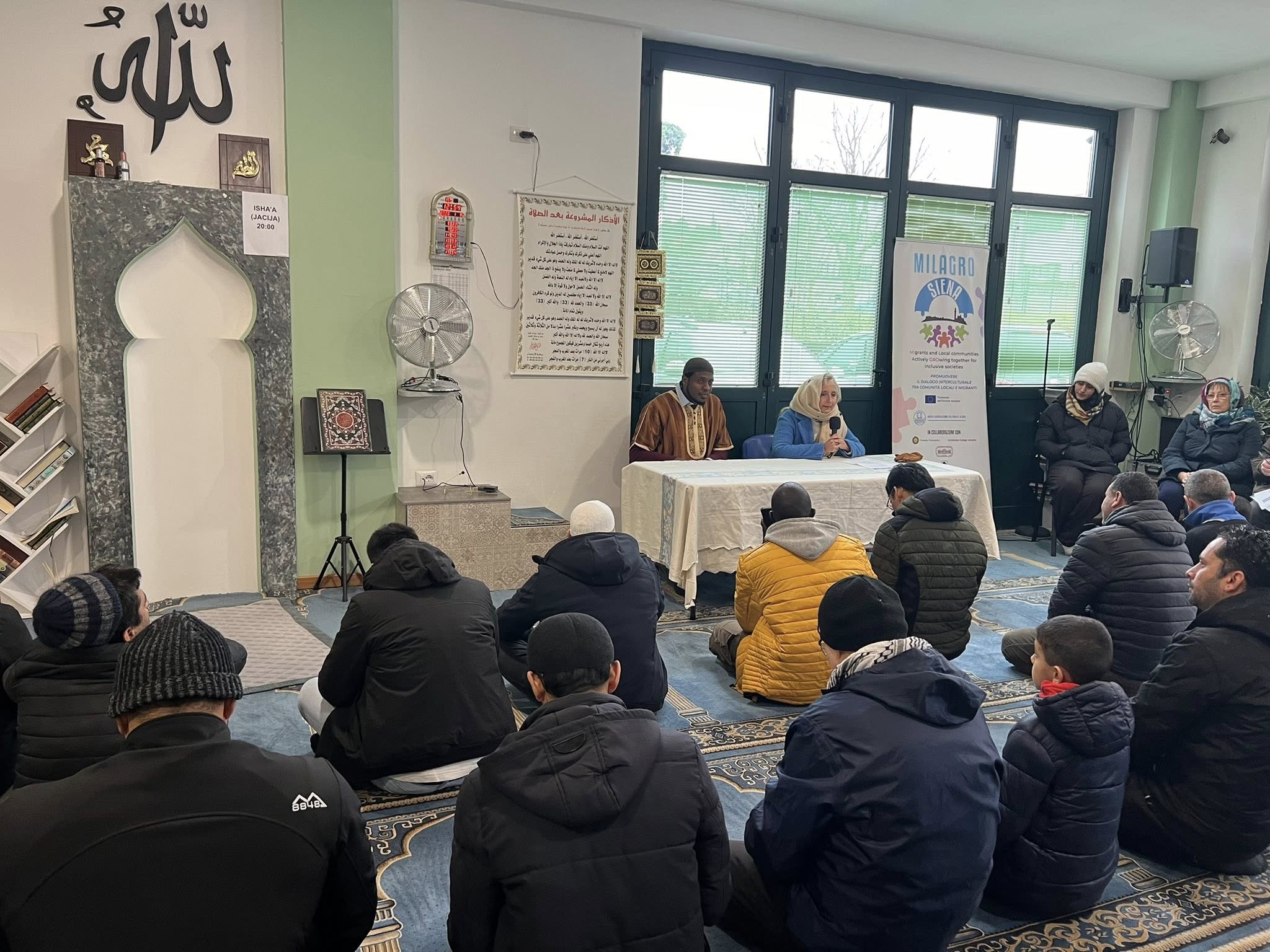
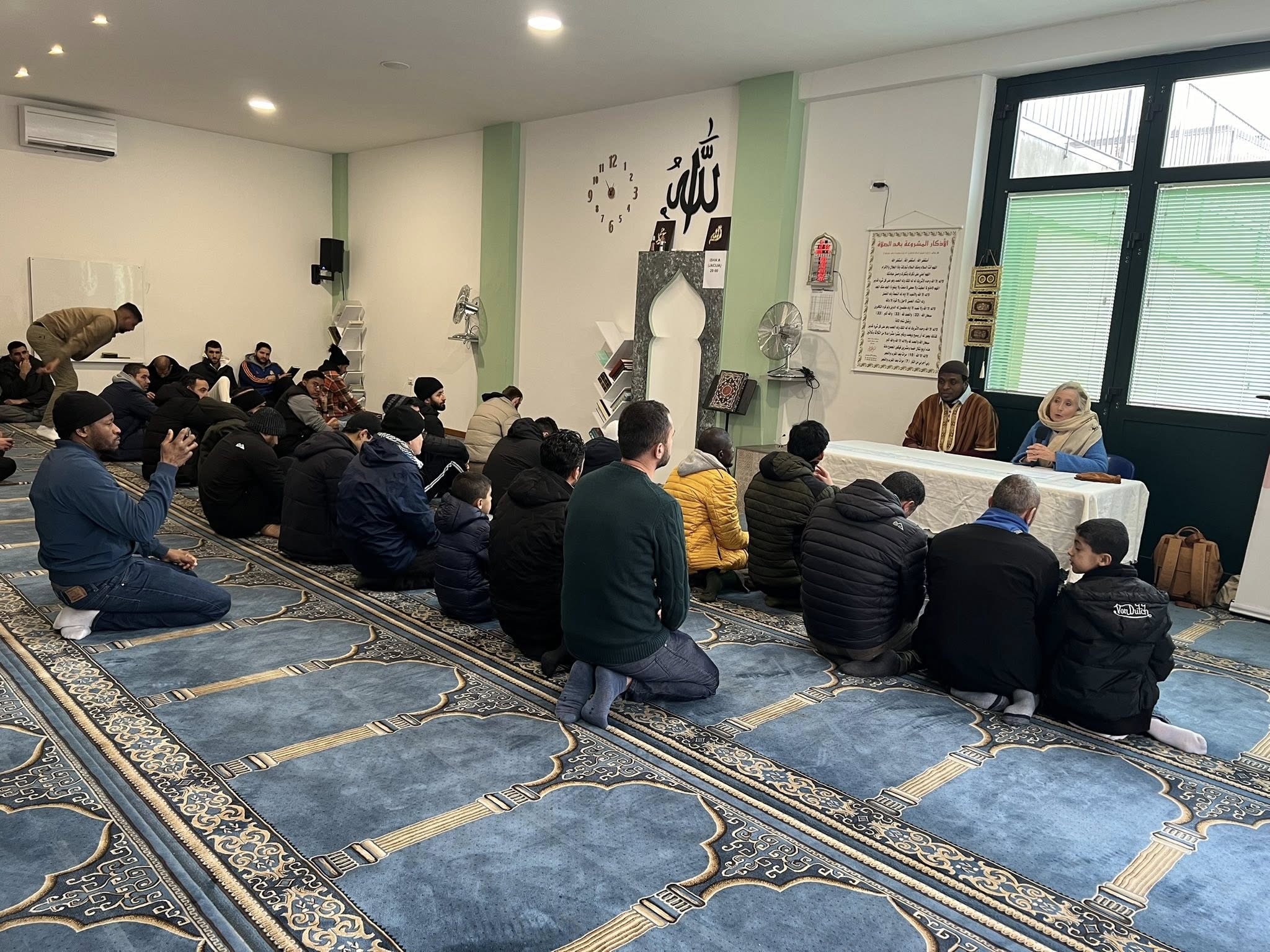
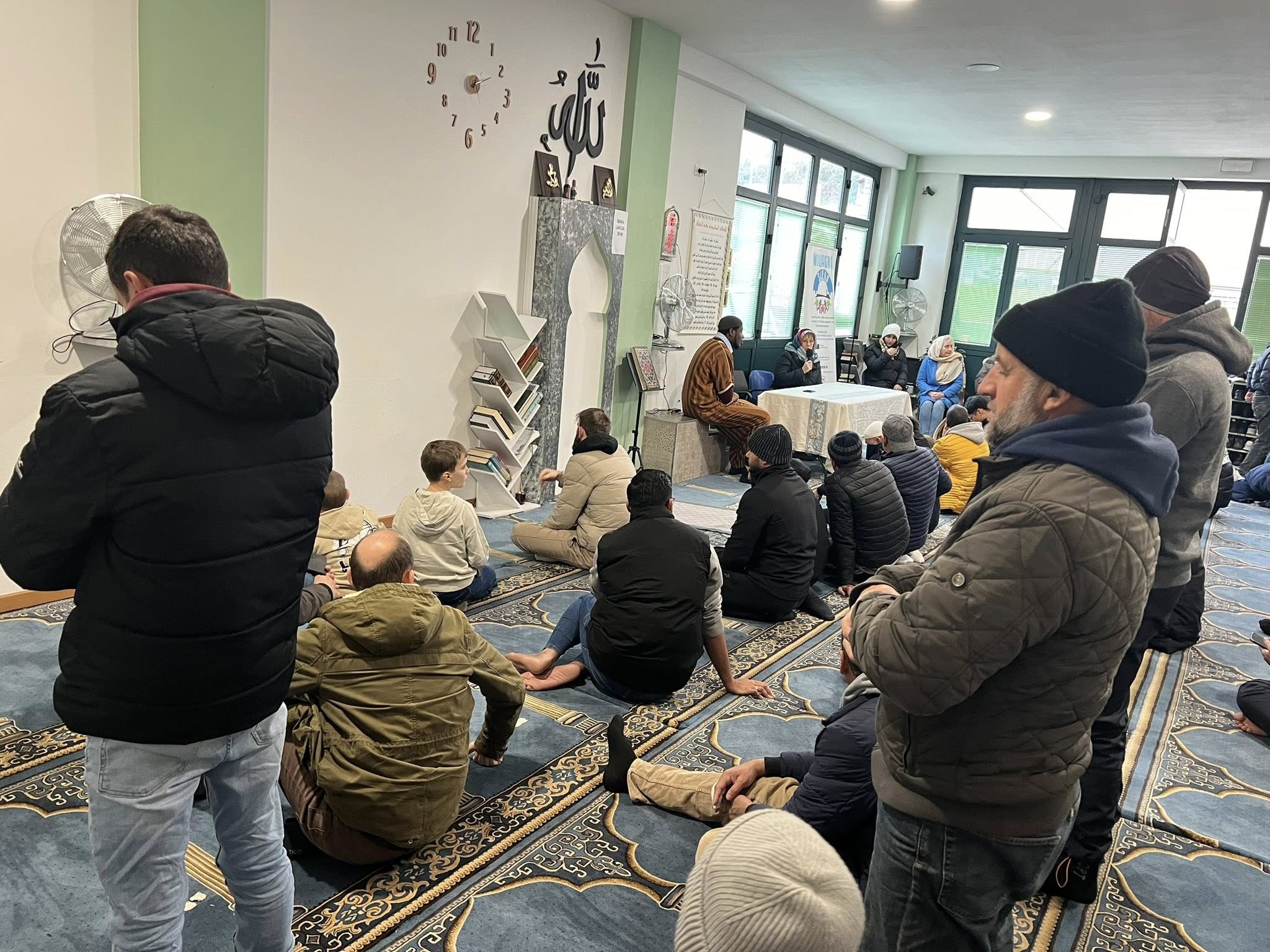
The 7th local assembly in Siena of the MILAGRO Project was held on January 9, at the Due Ponti Islamic Center, bringing together around 200 participants from the local community. The meeting created a shared space for dialogue on how the activities and tools developed within the project can support the daily lives of migrants and families attending the center in Siena.
At the beginning of the assembly, the members of the Islamic center were informed about the MILAGRO project, since many participants encountered it for the first time. The presentation introduced the project’s objectives, activities, and the European framework. MILAGRO — MIgrants and Local communities Actively GROwing together for inclusive societies — is a two-year initiative funded by the European Union under the CERV programme (Citizens, Equality, Rights and Values). Participants were also informed that the CERV programme supports initiatives aimed at strengthening democratic participation, equality, fundamental rights, and inclusive societies in Europe. The project is implemented across Italy, Serbia, and the Netherlands and seeks to foster culturally diverse democratic communities grounded in solidarity, equality, and the recognition of diversity as a shared resource.
During the assembly, the project was presented not only in terms of its structure, but also through its practical implications for the local community. Activities carried out within MILAGRO — including structured meetings on democratic participation and digital competences, training and reflection sessions, storytelling initiatives, intercultural exchanges, summer camps, and pathways for mediation and coaching — were discussed as opportunities to strengthen personal skills, support active citizenship, and facilitate integration processes for migrants, refugees, and asylum seekers.
Particular attention was given to storytelling and the exchange initiatives, which were recognized as especially meaningful for the community of the Islamic center. These activities provide safe and welcoming spaces where participants can share experiences, preserve cultural identities, and foster mutual understanding with the wider local community. Intercultural mediation and coaching pathways were also presented as concrete resources that can help families navigate everyday challenges such as access to education, employment, and public services.
A key moment of the meeting was dedicated to the presentation of the Kultialogo app, one of the project’s main tangible outcomes. Participants explored how the application can function as a platform for sharing stories, experiences, and cultural perspectives, extending dialogue beyond in-person encounters and allowing members of the community to remain connected within a broader intercultural network. The app is available online at: https://kultialogo.base44.app/
The discussion also highlighted how the values promoted by the project — dialogue, cooperation, and respect for diversity — resonate with principles that are meaningful for the community hosting the event. By encouraging encounters between people of different cultural and religious backgrounds, the assembly reinforced the idea that trust and collaboration are essential for building supportive local networks and strengthening a sense of belonging.
The event concluded with open conversations among participants, who reflected on how to continue using the project’s tools and approaches in everyday community life. The strong participation confirmed the importance of creating regular opportunities for dialogue, learning, and cooperation, and reaffirmed the shared commitment to nurturing an inclusive and cohesive local environment.