7 April, 2026
The program:
• Opening words
• The EU CERV action (goals)
• MILAGRO: aims and working packages
• The Observatory on Inclusive Communities
– Aims
– Sections
– Data collection
– The actual website
• Actions for social inclusion
– Municipality of Utrecht: Anne de Vries (Policy Advisor / Project Leader)
– Incluusion (Utrecht University): Lina Senen (Project Coordinator for
Traineeships and Education)
– Common Frames: Sanne Sprenger (Founder and Artistic Director & UU
teacher)
• The future of the Observatory: open discussion
• Closing words
• Small cocktail party
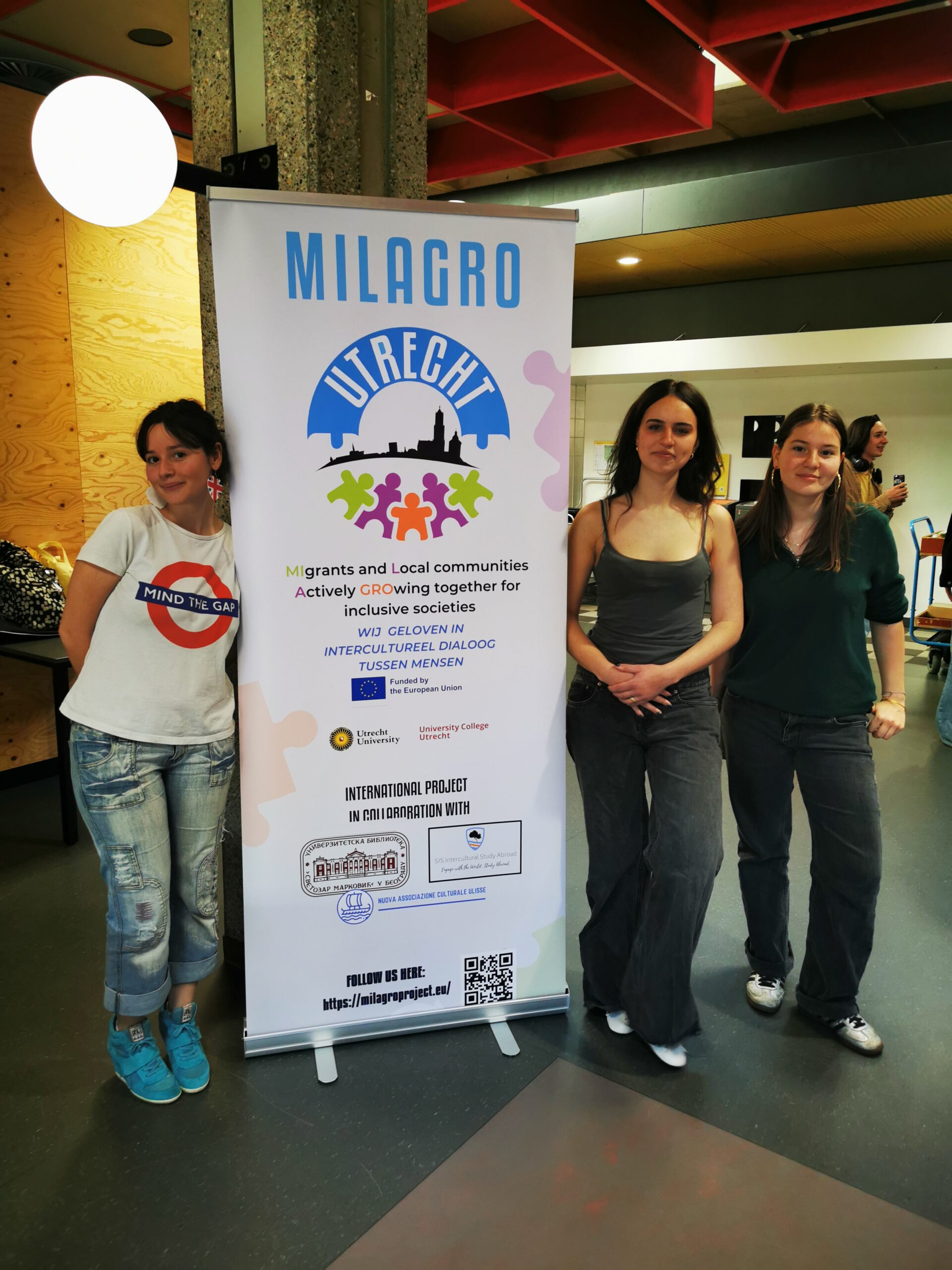
The Observatory Launch was organized at the Utrecht International Campus, where University
College Utrecht, the Dutch beneficiary of the MILAGRO project, is located. The Observatory
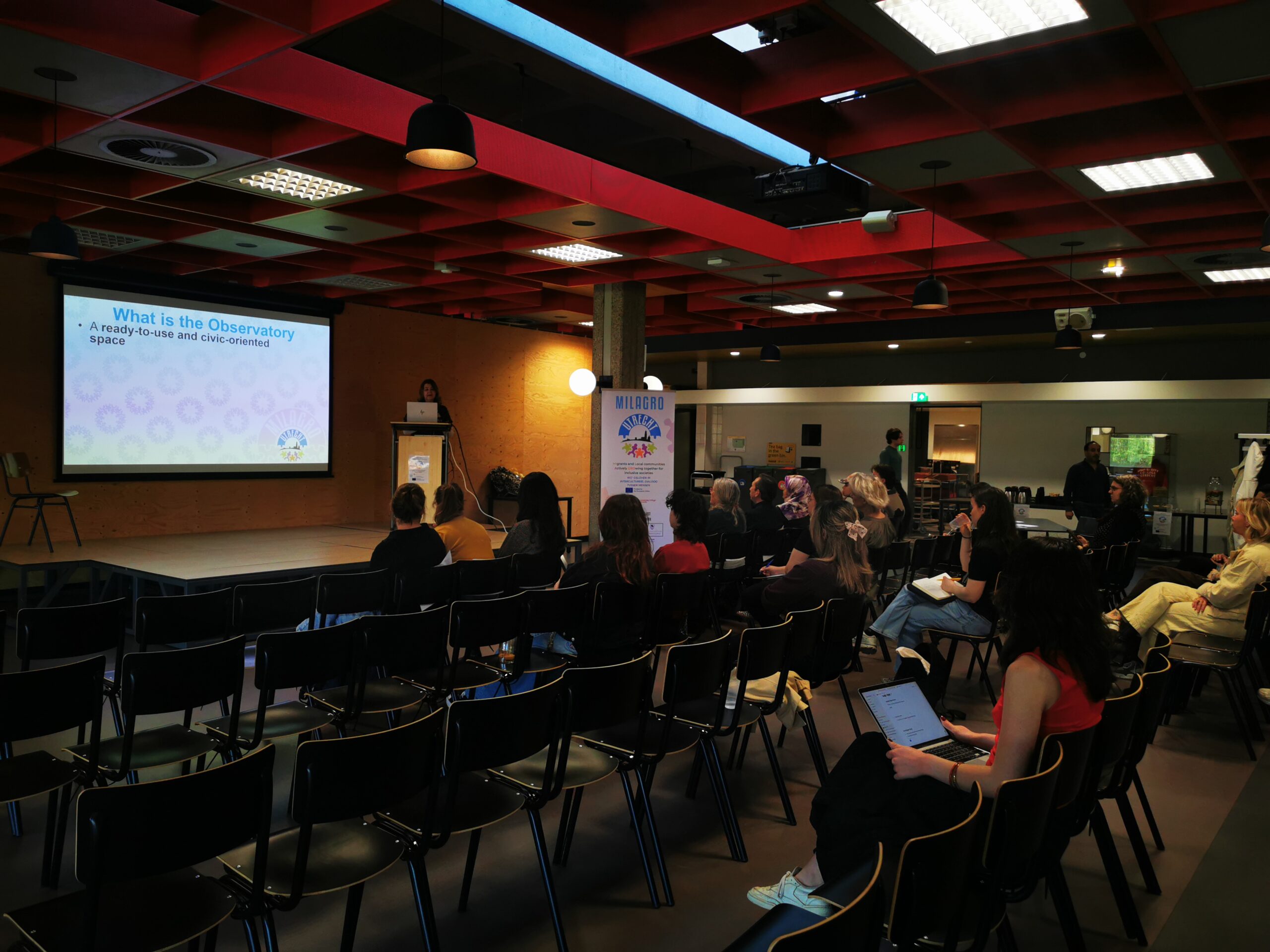
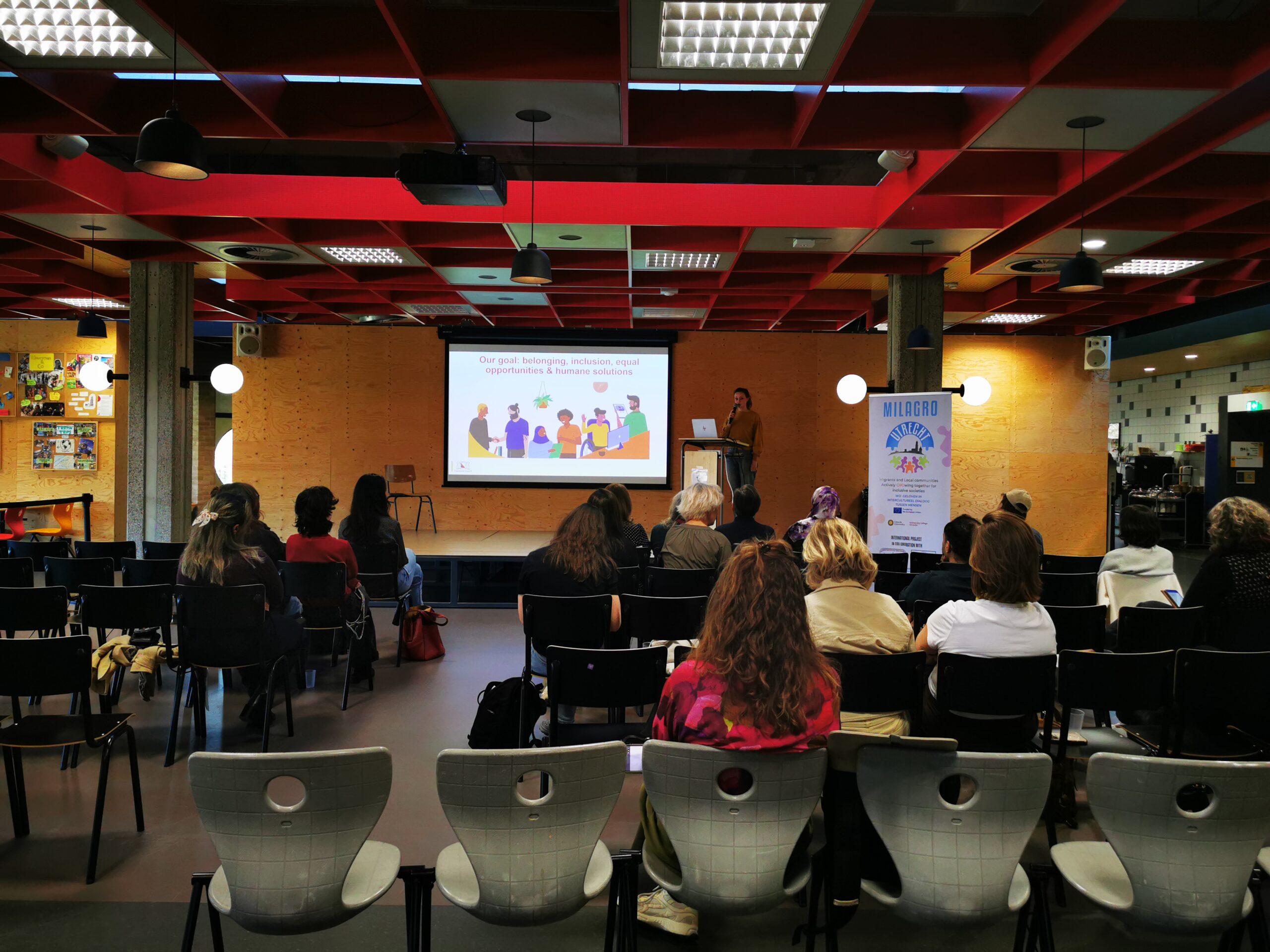
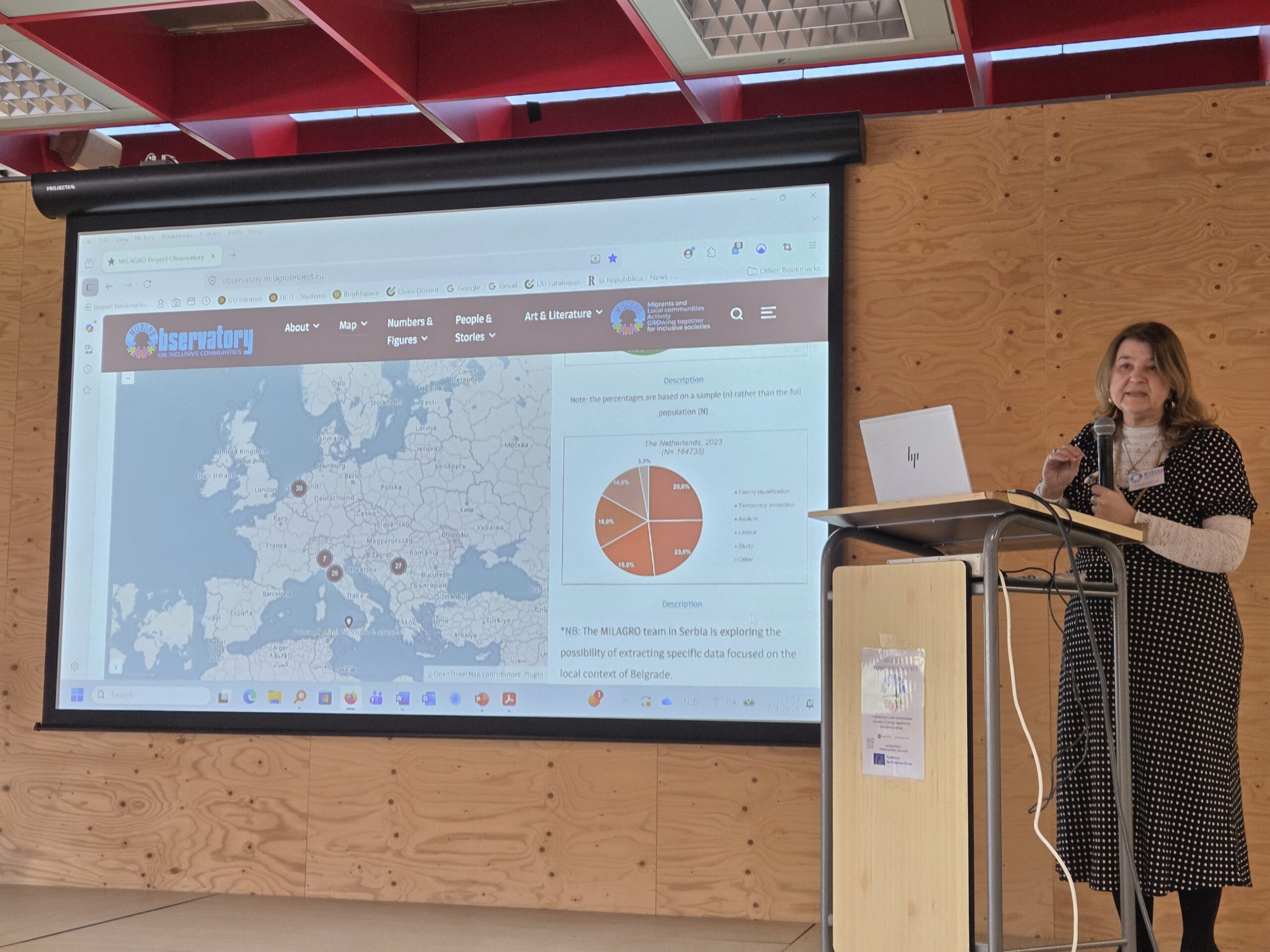
was presented by Dr. Tatiana Bruni, the Local Project Coordinator, who started with an
introduction on the EU CERV action, its aims, and the four priorities in focus. She then moved
to introduce the priority chosen by the MILAGRO Project Team, that is, priority nr. 3: Engaging
citizens and communities in discussions and action related to solidarity, to then present the aims
of MILAGRO regarding content, use and target users.
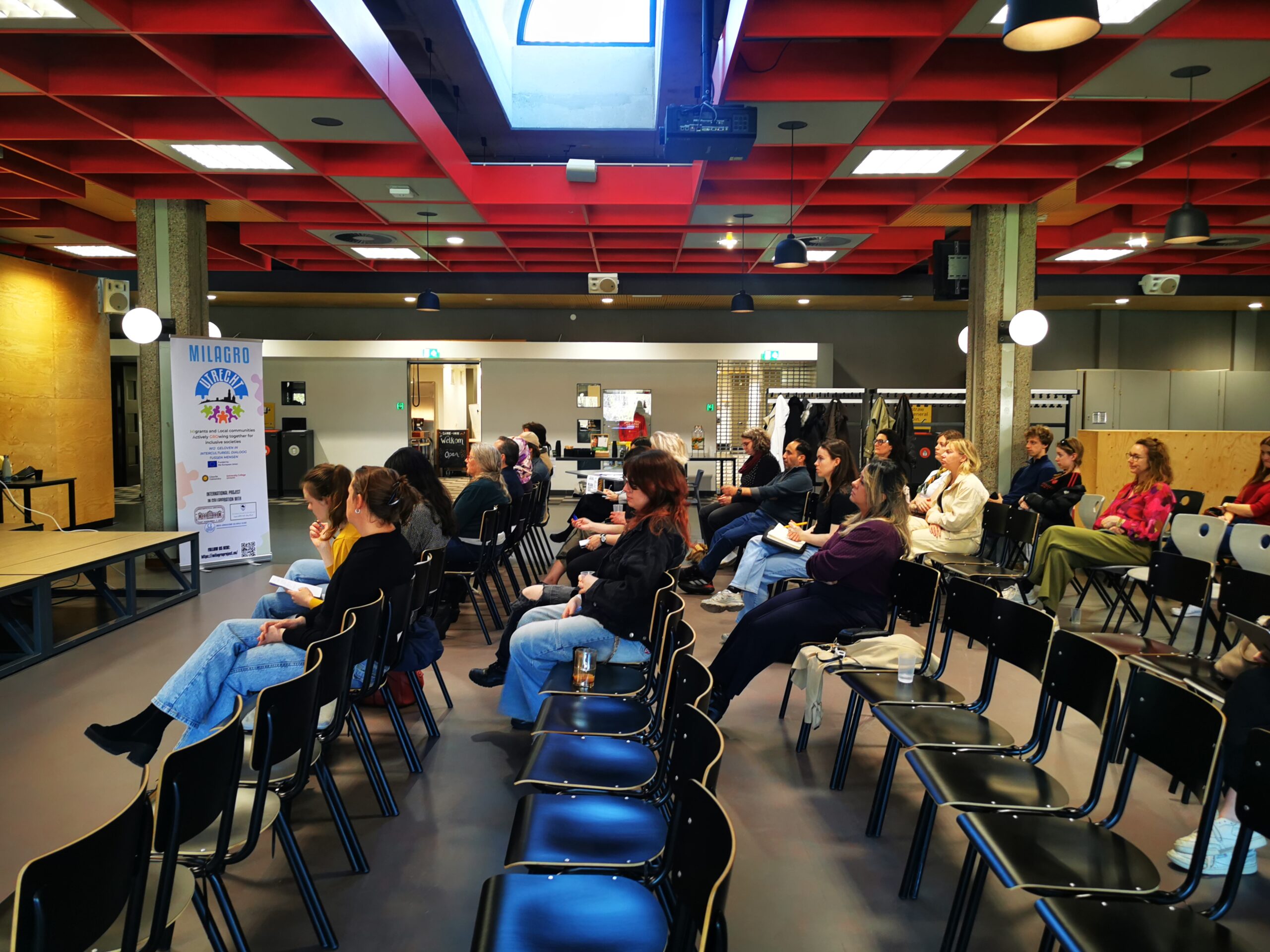
Around 40 people joined the event.
Dr. Bruni then showed the Observatory website in detail, illustrating all the sections, with
particular attention for the geo-visual map of organizations that support and strive for social
inclusion in the three project countries. She presented the different types of data collected by
student interns, with quantitative data visualized in graphs and qualitative data related to
individuals with a migration background forming the source for the sections “People & Stories”
and “Arts & Literature”. The audience was also informed about the possibility of joining the
Observatory as organization by filling in an online form on the website, so to contribute to
adding new organizations operating in the current locations, but hopefully also operating in
other cities of the three partner countries and/or other EU countries.
Dr. Bruni also introduced the Report on Actions of Social Inclusion, which is one of the
deliverables of the project, and that will collect data, through semi-structured interviews, about
actions aimed at migrants’ inclusion in the local communities carried out by local associations
and institutions.
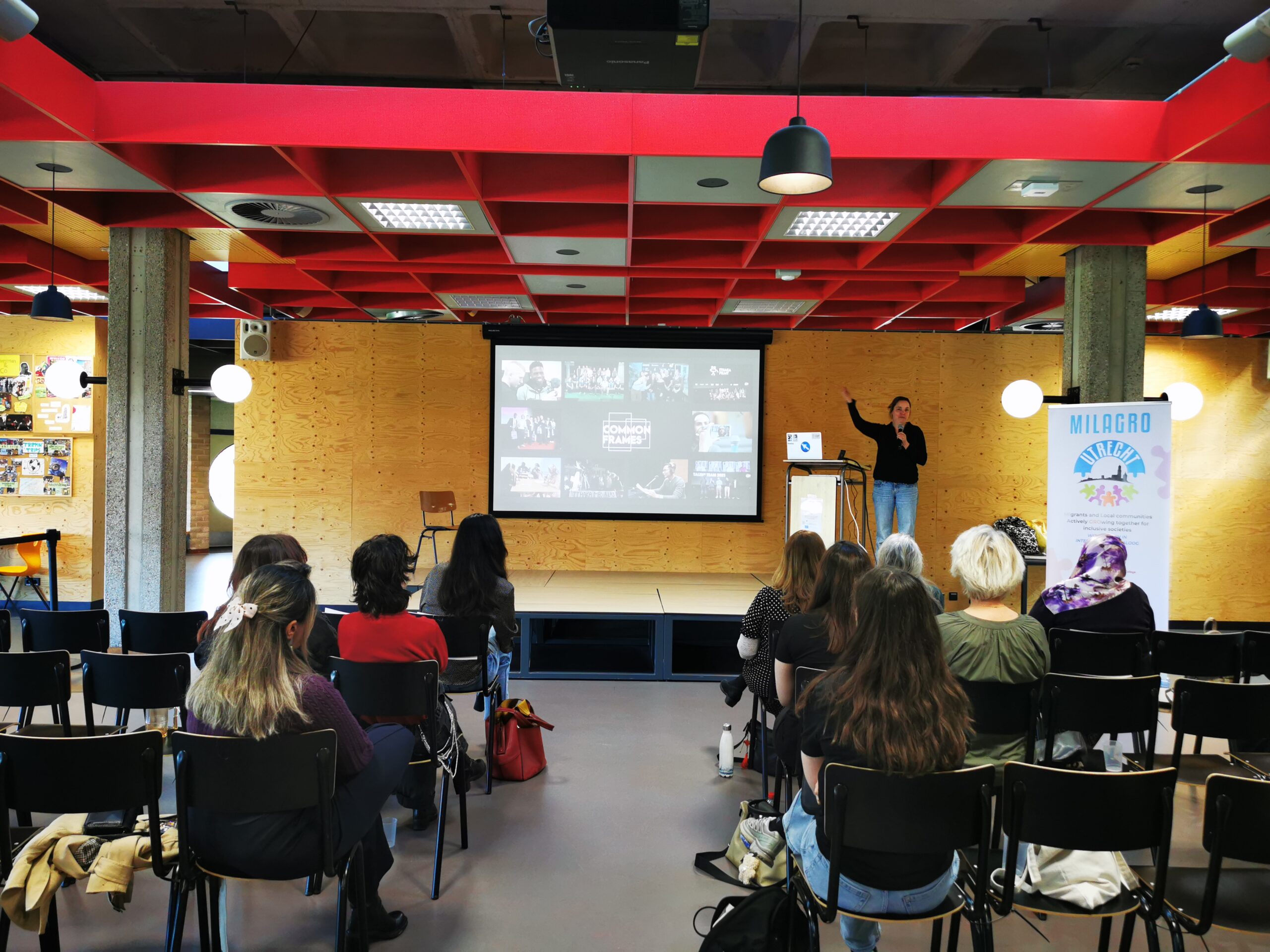
After the presentation of the Observatory, Dr. Bruni gave the floor to three guest speakers: a
policy advisor on asylum and integration for the Municipality of Utrecht, the project coordinator
at Incluusion, the refugee program of Utrecht University, and artistic project leader at Common
Frames, a foundation for media education projects for young newcomers in the Netherlands. The
MILAGRO team Utrecht collaborated with the Municipality, as well as with the other two
organizations, during the project time. The three speakers presented the programs and actions of
social inclusion put in place by their organizations.
Dr. Bruni concluded the Observatory Launch highlighting the hope that after the end of the
project, the project team will find ways to ensure that the Observatory will continue to be
updated, expanded and used, and asked the attendees to provide the team with suggestions to achieve this goal.
The audience was made up of professors and students at Utrecht University; policy advisors of
two municipalities, and some interested citizens who have participated in MILAGRO activities
before.
Finally, all participants were invited to the Final Local Event, which would also be organized at
the Utrecht International Campus on Saturday, May 9.
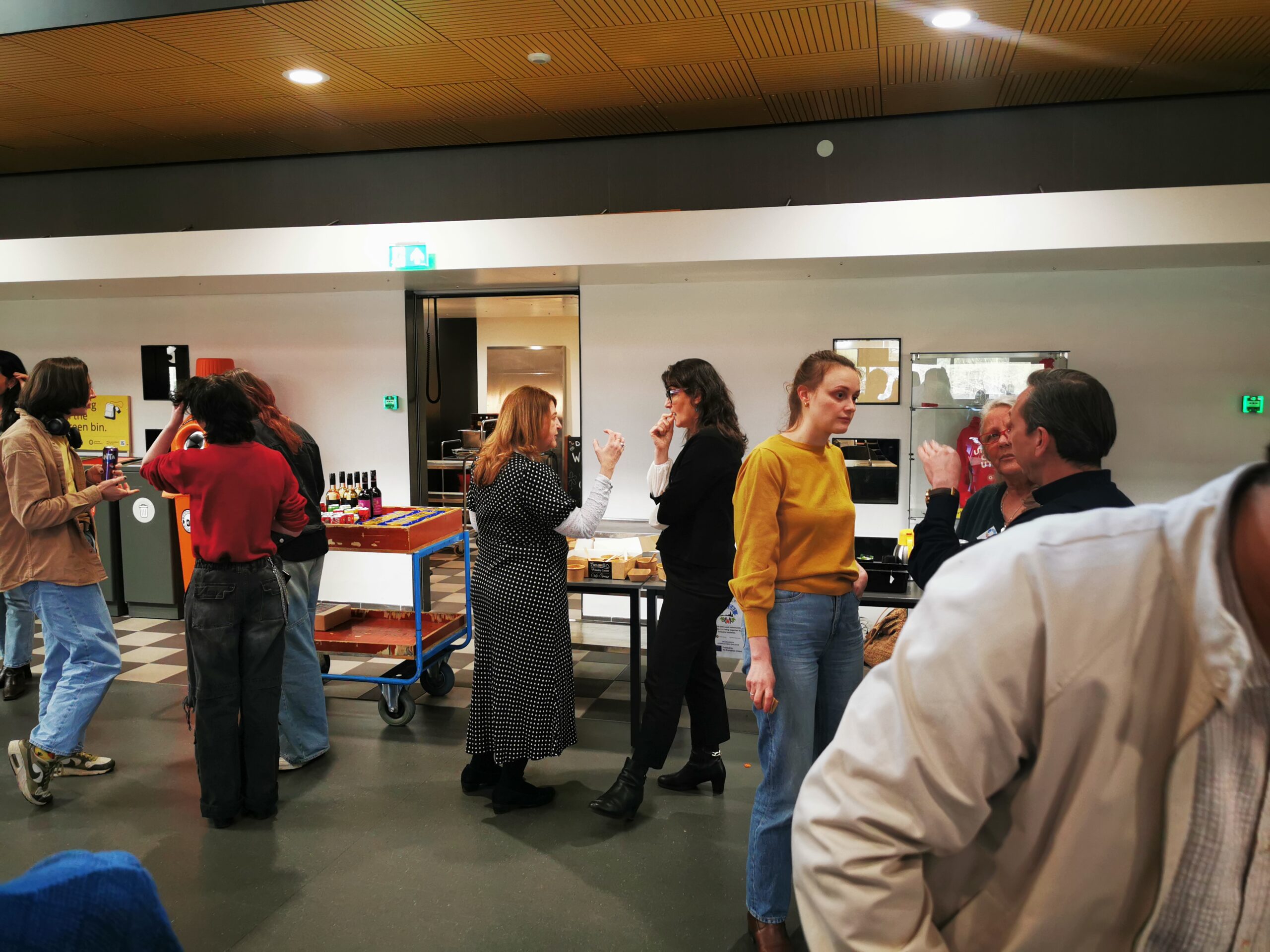
After the presentation, a small cocktail party followed for all those present, where the details of
the MILAGRO project, as well as future potential collaborations, continued to be discussed in a
lively dialogue.